13 september, 2026
Most Rev. José Imbamba: “Forgiveness is not a feeling; it is a decision”During the Mass of the September International Anniversary Pilgrimage, the Archbishop of Saurimo warned about the effects of resentment in families and society and called for openness to dialogue and reconciliation.
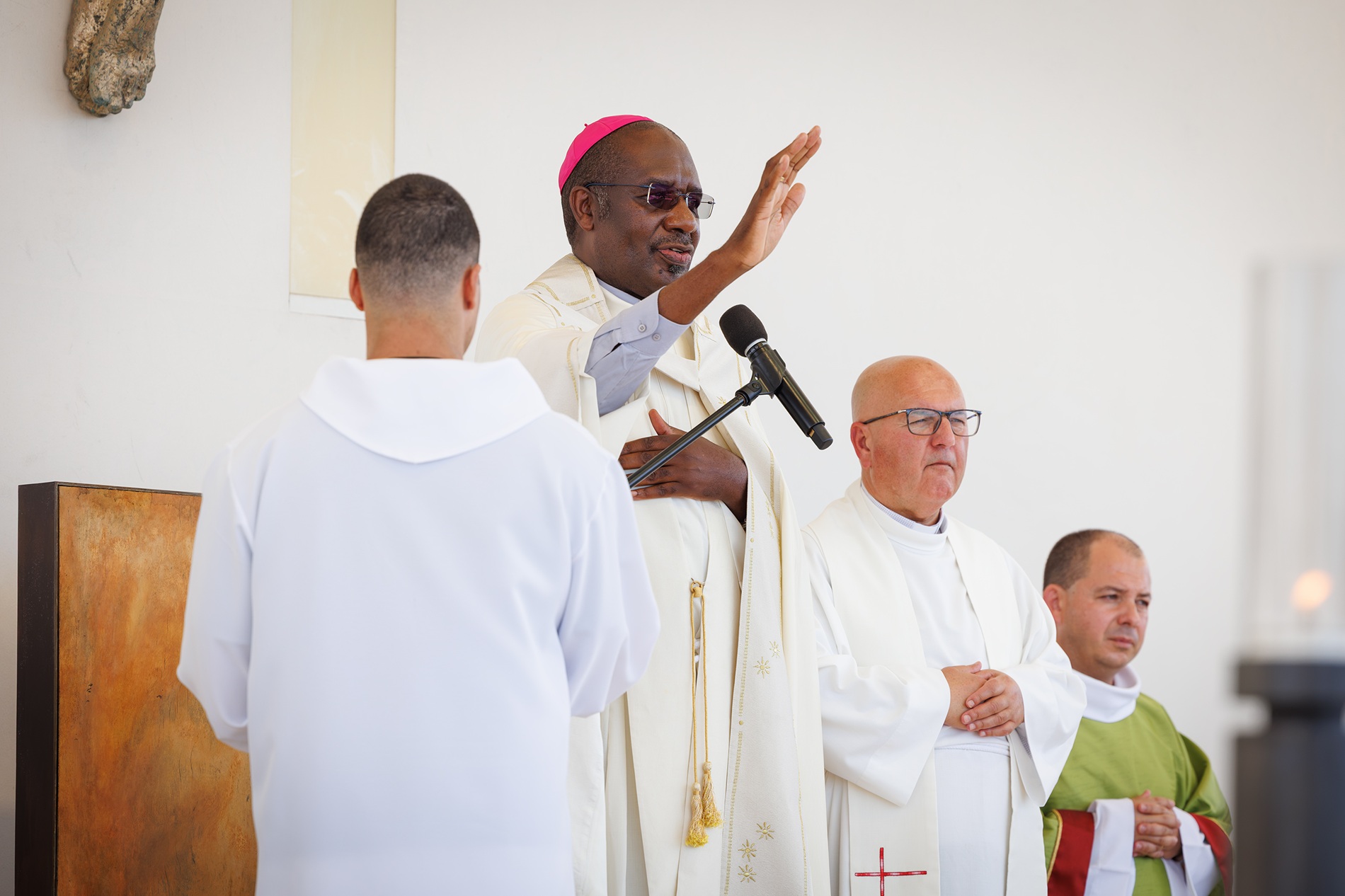
The Archbishop of Saurimo and President of the Episcopal Conference of Angola and São Tomé, Most Rev. José Manuel Imbamba, stated that forgiveness “is not a feeling; it is a decision” and argued that this attitude is essential to overcoming hatred and resentment and to building peace. In his homily during the September International Anniversary Pilgrimage Mass, celebrated in the Prayer Area, Most Rev. José Imbamba drew from the proclaimed Gospel, in which Peter asks Jesus how many times he should forgive his brother. Christ's answer—“I do not say to you up to seven times, but up to seventy times seven”—reveals that forgiveness cannot be “an arithmetic calculation of 490 times.” “A Christian cannot go through life doing accounting on forgiveness. Love does not work with a calculator,” he said. The archbishop warned of the consequences of accumulated grievances and resentments in family and social relationships. “How many families are broken because of a single poorly spoken word? How many parents do not speak with their children, how many siblings have severed relationships, and how many couples live under the same roof as strangers because they refused to overcome one or two offenses?” he asked. His message extended to the international context as well. Facing a world marked by conflicts and wars, Most Rev. José Imbamba questioned how many countries remain in conflict “due to a lack of willingness to dialogue and forgive.” Referring to the parable of the two debtors, he also criticized cases where “some powerful nations suffocate and depress small nations through unjust debts.” “Anyone who experiences the immensity of God's forgiveness cannot turn their own heart into a courtroom with the right to judge and condemn others without mercy and without a chance at restoration,” he maintained.
In the homily, the pilgrimage leader distinguished forgiveness from the acceptance or denial of injustice. “Forgiving does not mean approving the wrong or saying that the injustice did not happen,” he stated. “Forgiving is not pretending to have amnesia or erasing the truth.” Instead, forgiveness prevents pain from continuing to dictate the life of the person who suffered. “There is a fundamental difference between remembering a wound and living around that wound. Remembering with a healed scar is wisdom; living while bleeding from the same wound is slavery.” In this sense, the Archbishop of Saurimo argued that forgiveness is a decision and that everyone can choose today not to live under the oppression of hatred and resentment. “Forgiveness does not change the past, but it has the power to free and transform our present and future,” he added. Drawing from Saint Paul's teaching to the Romans in the Second Reading, he emphasized that “when we decide to forgive from the bottom of our hearts—not just lip service or with a fake smile—God begins a completely new work in us.” Acknowledging that some offenses require “tears, time, support, and much prayer,” Most Rev. José Imbamba stated that “heartfelt forgiveness heals what was blocked and allows us to walk again and soar to new heights of fulfillment.” In the context of the Shrine of Fátima's two-year theme, “Heart of Mary, path to see God,” the archbishop entrusted families and a world marked by division to Mary, asking for her intercession for peace. “That peace can only be born from reconciled hearts that know how to renounce the cycle of hatred and revenge,” he concluded.
Rector of the Shrine of Fátima reinforces call for peace
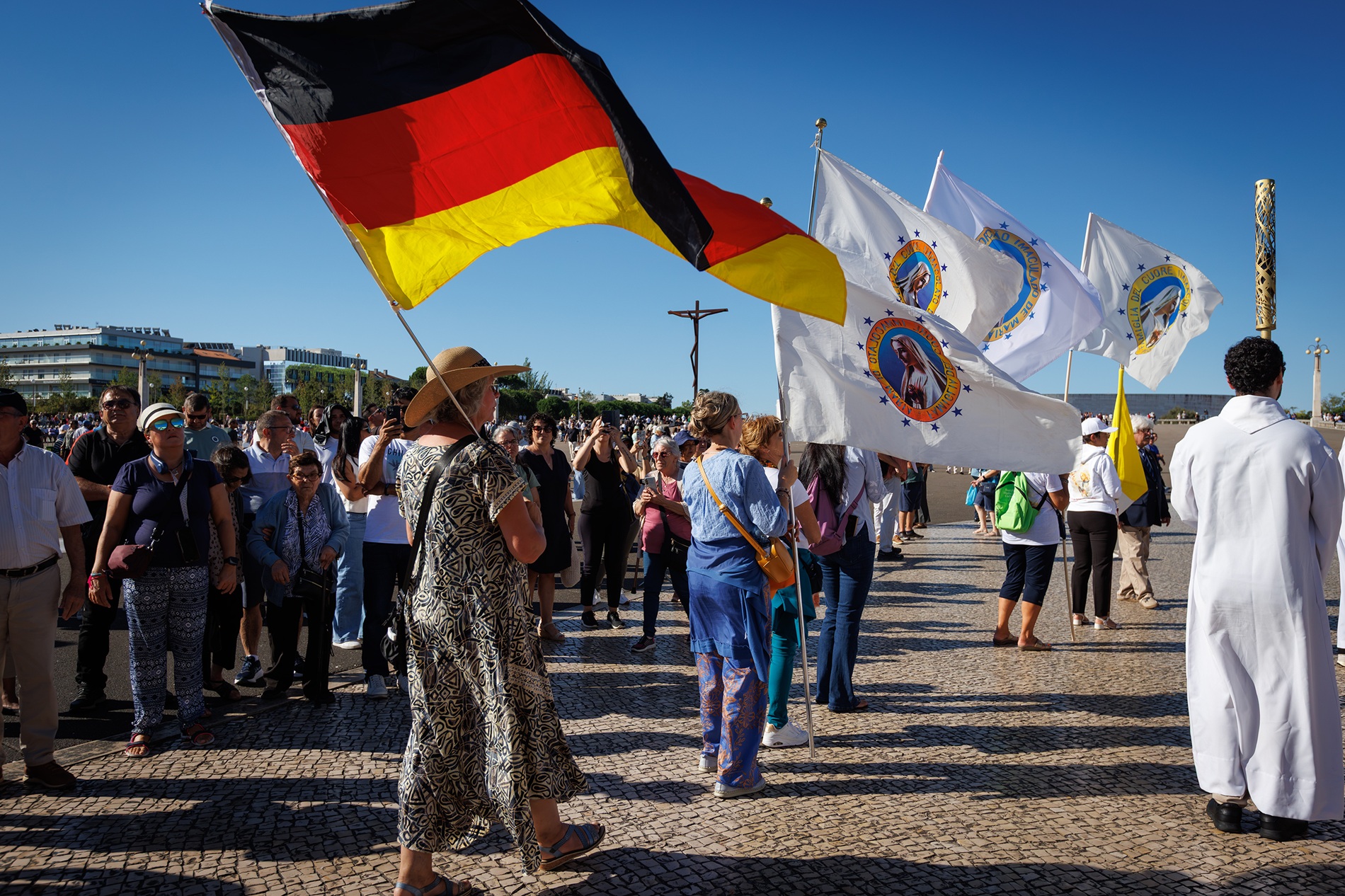
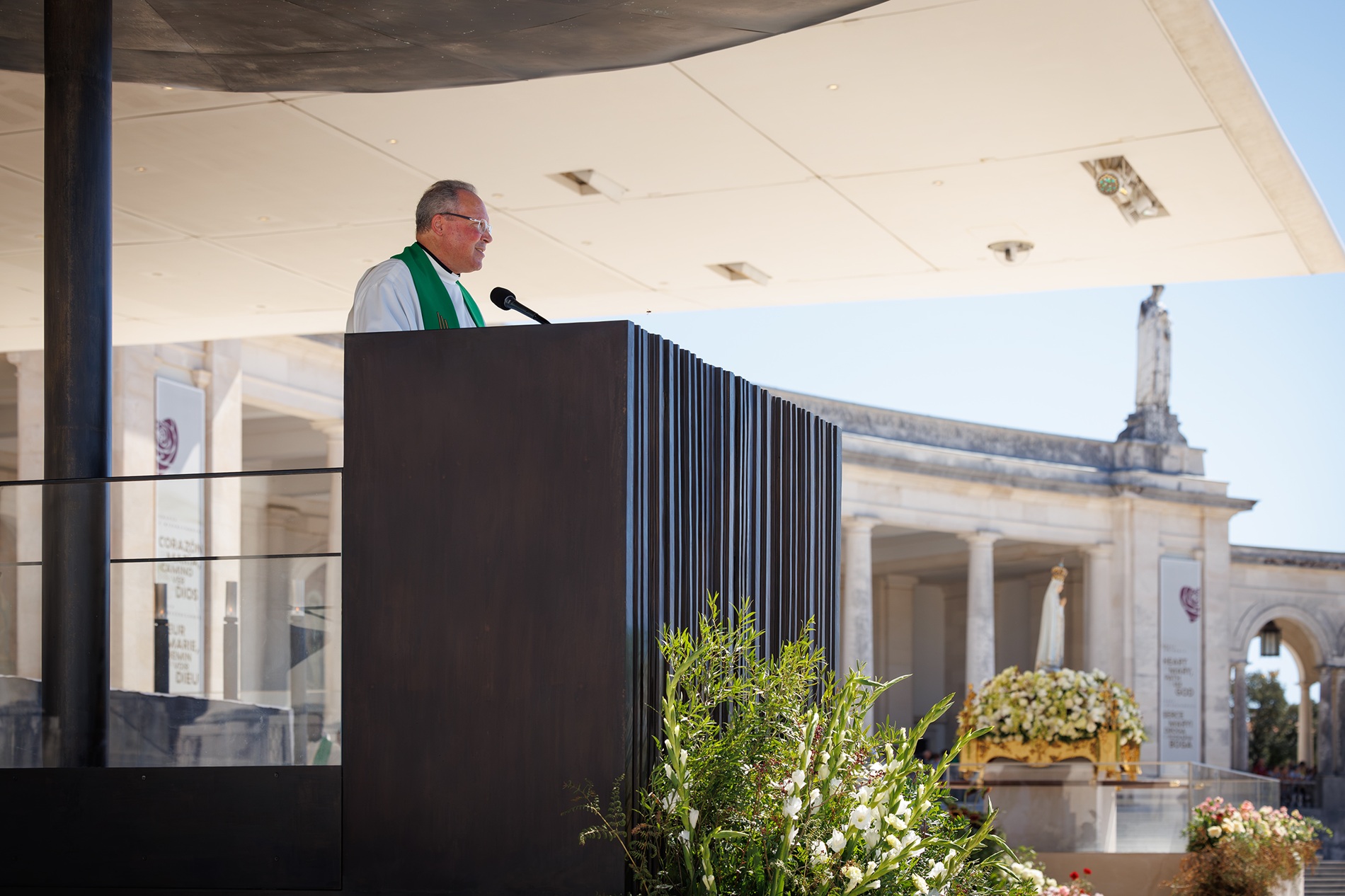
At the end of the celebration, the rector of the Shrine of Fátima, Father Carlos Cabecinhas, reiterated the call for peace, reminding everyone that this was one of the key messages persistently left by Our Lady in Fátima. “Dear pilgrims, in these troubled times we live in, we are challenged to continue praying for peace in the world,” he stated, emphasizing that this is “the request repeated persistently by Our Lady here in Fátima” and one that pilgrims are invited to take home with them. The rector connected this call to the reflection shared at the end of Most Rev. José Imbamba's homily, stating that peace “can only be born from reconciled hearts that know how to renounce the cycle of hatred and revenge.” “A peace that requires forgiveness as a condition,” he added. Father Carlos Cabecinhas also extended a greeting to pilgrims of different languages before inviting participants to conclude the pilgrimage with a moment of consecration to Our Lady: “Let each of us, in the silence of our hearts, entrust ourselves to Mary. Entrust Mary with your life. Entrust Mary with those you love and hold in your heart.” Approximately 30,000 pilgrims participated in the celebration on September 13. Concelebrating were two cardinals (Most Rev. António Marto and Most Rev. Manyo Maeda), three bishops (Most Rev. Ottorino Assolari, Bishop Emeritus of Serrinha in Bahia, Brazil; Most Rev. Augusto César, Bishop Emeritus of Portalegre-Castelo Branco; along with the pilgrimage leader), 87 priests, and five deacons. The Word to the Sick was delivered by Maria Leonor Botelho, from the Association of Servants of Our Lady of Fátima.
|